For piano teaching
The piano studio, from lesson to home.
Concertist prepares the lesson, teaches it with the teacher and sends the homework to the student. At home, everything is there: the week's practice, the scores, the games.
Concertist Studio
A lesson in four steps.
The teacher's app, on Mac and iPad. It follows the lesson from start to finish, with no paperwork after.
Before the lesson: where the student is, the plan, the book pages.
- 01
Prepare
The lesson plan, the pieces, the book pages. Everything is ready before the student arrives.
- 02
Teach
The score on screen, pen annotations, a timer for each part of the lesson.
- 03
Wrap up
What was covered, what is left to work on. A checklist, not a report.
- 04
Send
Homework, pages and files go to the student and the family, by email and on the portal.
Transcription on the device, no cloud. French and English throughout.
Students and families
The week's practice, on the phone.
After each lesson, the student finds what to practise. The parent sees the same thing, for each child.
The week
What to do each day, ticked off once done.
Homework
Each task with its page, its minutes and how often.
Files
Scores, videos and recordings sent during the lesson.
Ear training
Dictations with audio, at the student's level.
Books and content
Material made for the lesson.
A bank of pages and books written for teaching, from the first lesson to advanced levels.
The Concertist books, from level A1 to level C2
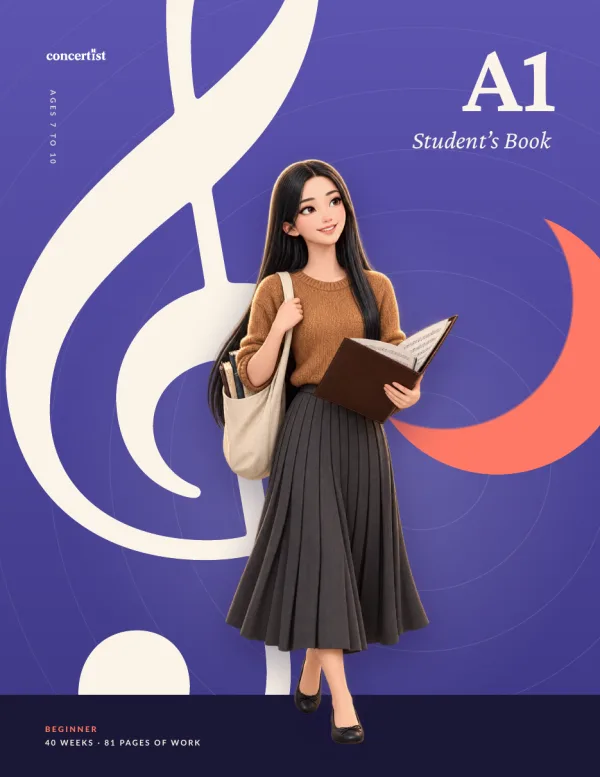
A1Coming soon
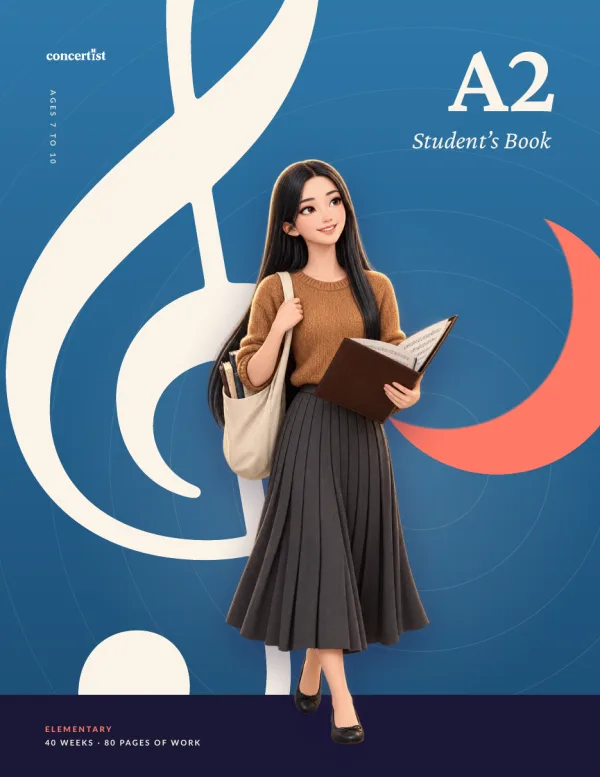
A2Coming soon
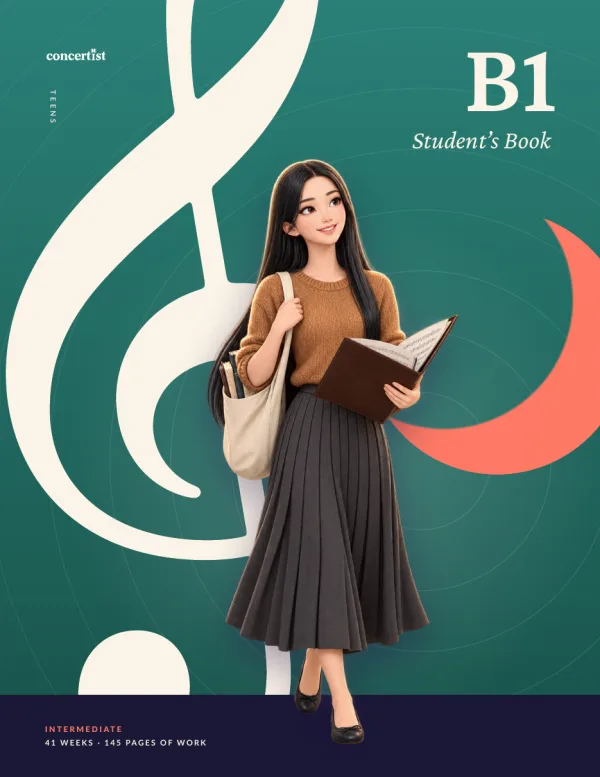
B1Coming soon
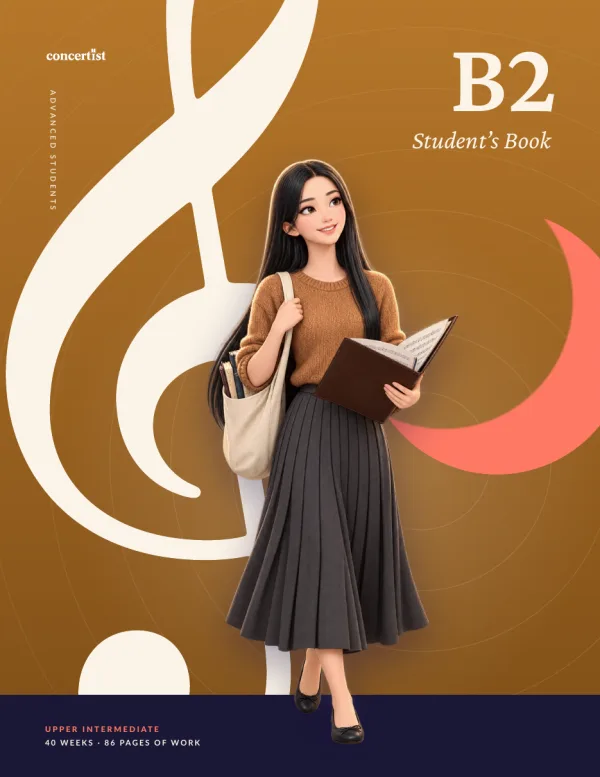
B2Coming soon
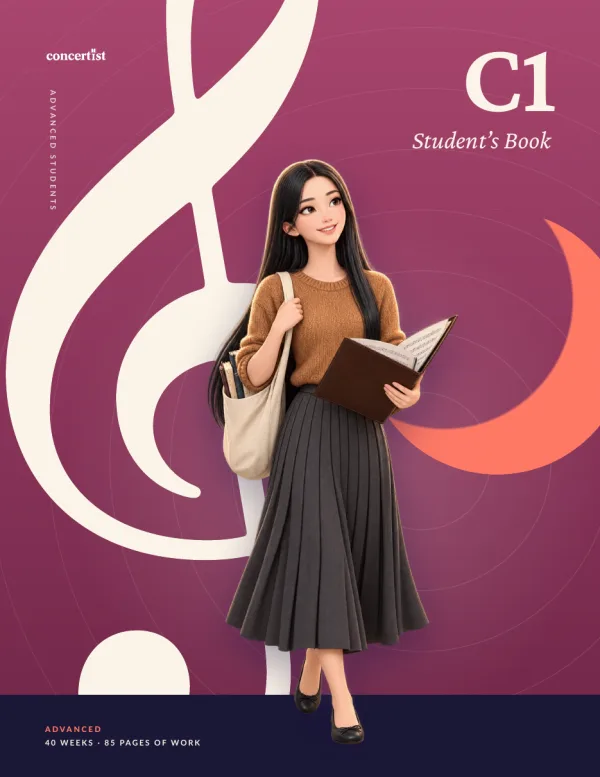
C1Coming soon
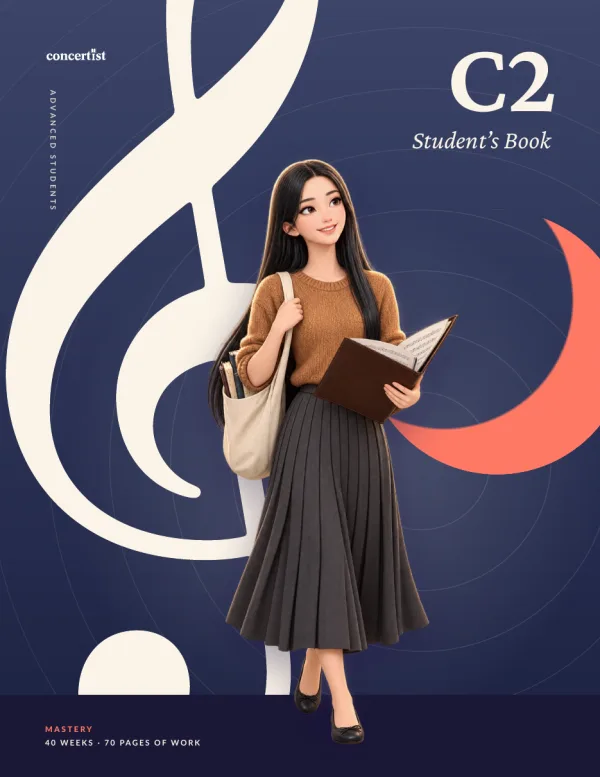
C2Coming soon
Weekly workbooks
One printed workbook per student: the plan, the practice grid and the day's pages.
Level books
From Pre-A1 to C2. One book and one workbook per level, one concept at a time.
Theory inside a real piece
Each concept is learned in a piece the student loves, never in a vacuum.
Dictation and listening
Recorded excerpts, a QR code in the workbook, the audio on the phone.
Educational games
Read and hear, by playing.
Short games for note reading, ear training and theory. The teacher adds them to homework; the results come back to them.
- MaestroRead notes on the musical staff.
- Interval ReadingIdentify intervals on the staff.
- Chord ReadingRead and name chords on the grand staff.
- Cadence TrainerIdentify cadences by ear.
- Ear TrainerRecognize scale degrees by ear.
- Interval Ear TrainerIdentify intervals by ear.
- Chord TrainerIdentify chord types by ear.
- Chord SequenceIdentify chord progressions.
- Perfect PitchName a single note with no reference.
- Mode DetectiveIdentify musical modes by ear.
Material sharing
One click in the lesson. It's at the student's.
What is used in class is used at home too. Nothing to scan, nothing to send separately.
A book page
The page open during the lesson, with its annotations.
A PDF or an image
A score, an exercise, a sheet.
A video
A YouTube playlist per student, or a video from the lesson.
A file from the family
The family can also send a recording to the teacher.
Music schools
Coming soon for schools.
Several teachers, a shared schedule, families and billing in one place. Write to us to be part of it from the start.
Write to usContact
A question, a demo?
Teacher, family or school: a few words is enough. The answer comes by email.